
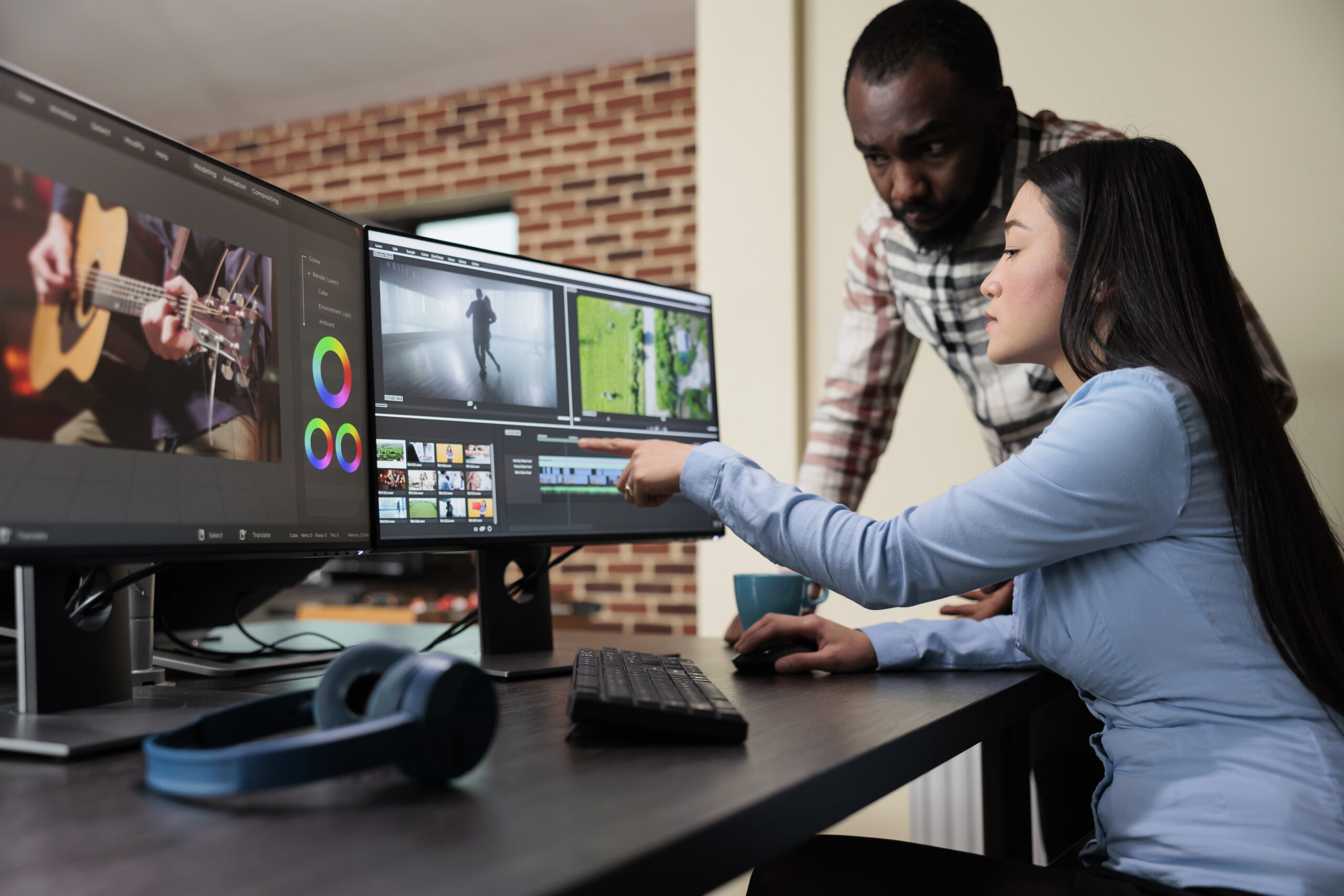
The convergence of artificial intelligence and advanced animation techniques has fundamentally transformed what's possible in video content creation. Businesses today operate in an environment where audience expectations for production quality have never been higher, while the volume of content required to maintain competitive visibility has reached unprecedented levels. Meeting these dual demands through traditional production methods alone has become economically impractical for most organizations. The integration of AI Video Editing capabilities into modern content workflows addresses this challenge by dramatically accelerating production timelines, reducing per-video costs, and enabling creative teams to focus their expertise where it delivers maximum value. This technological evolution isn't diminishing the importance of human creativity—it's amplifying creative professionals' ability to produce compelling content at scale while maintaining the quality standards that audiences demand.
The AI Revolution in Video Production
Artificial intelligence has penetrated virtually every aspect of video editing, from initial footage organization through final color grading and export optimization. Modern AI systems perform tasks that previously consumed hours of manual labor, completing them in minutes with consistent accuracy that rivals or exceeds human performance.
Automated scene detection analyzes footage and identifies natural breaking points, eliminating the tedious process of manually scrubbing through hours of raw content. Speech-to-text transcription generates accurate captions and subtitles automatically, making content accessible to hearing-impaired audiences while capitalizing on the 85% of social media videos watched without sound. Sentiment analysis identifies emotional peaks in conversations and presentations, highlighting moments most likely to engage audiences when extracted as standalone clips.
Object and face recognition enables sophisticated editing automation. AI systems can track specific individuals throughout footage, automatically maintaining proper framing when reformatting content from landscape to portrait orientations. They identify and catalog specific objects, products, or visual elements, enabling editors to quickly locate relevant B-roll footage within extensive libraries.
Audio enhancement represents another area where AI delivers remarkable capabilities. Algorithms automatically detect and reduce background noise, balance audio levels across multiple speakers or scenes, and enhance vocal clarity. Some systems can even separate voice from background sounds, enabling independent adjustment of each element for optimal mixing.
The pacing optimization performed by AI algorithms analyzes content rhythm and automatically removes dead air, extended pauses, and filler words while maintaining natural conversational flow. This automated tightening can reduce video length by 20-30% without sacrificing content value, creating more engaging videos that respect viewer time and attention.
Strategic AI Implementation
While AI capabilities are impressive, optimal results emerge from strategic implementation rather than blanket automation. Different content types benefit from AI assistance in different ways, and understanding these distinctions separates effective AI integration from disappointing results.
Social media content particularly benefits from AI's speed and scalability. When producing dozens of platform-specific clips weekly, AI handles bulk processing—generating captions, creating multiple aspect ratio versions, identifying highlight moments, and applying consistent branding elements. Human editors then refine pacing, ensure brand alignment, and add creative flourishes that differentiate content.
Long-form content like webinars, podcasts, and interviews leverage AI for initial organization and rough cutting. AI transcription, topic segmentation, and highlight identification provide editors with organized starting points rather than overwhelming raw footage. Human editors craft narrative flow, select the most compelling moments, and ensure content delivers strategic value beyond simple information transfer.
Educational and tutorial content benefits from AI's ability to identify and emphasize key learning moments. Algorithms can detect when instructors display screens, demonstrate techniques, or highlight important concepts, automatically applying visual emphasis like zooms, arrows, or callouts. Human oversight ensures these enhancements clarify rather than distract.
The Dimensional Advantage of 3D Animation
While AI-enhanced editing transforms how businesses work with recorded footage, three-dimensional animation opens entirely different creative possibilities. 3D animation provides complete environmental control, enabling visualization of concepts, products, and scenarios impossible to capture through traditional video production.
The applications span virtually every industry vertical. Real estate developers create photorealistic architectural walkthroughs of properties before construction begins. Medical device manufacturers demonstrate product functionality with transparent views revealing internal mechanisms. Software companies visualize data flows and system architectures that exist only in digital space. Consumer brands develop mascot characters that become recognizable ambassadors across campaigns.
Technical sophistication distinguishes professional 3D work from amateur attempts. Professional 3D animation involves specialized disciplines working in coordination: modelers create three-dimensional objects and environments; riggers build skeletal structures enabling realistic movement; animators choreograph motion; lighting artists establish mood and realism; texture artists add surface details; rendering specialists optimize computational processes for efficiency and quality.
The investment required for professional 3D production delivers exceptional returns when applied strategically. Unlike live-action shoots requiring location access, talent scheduling, and weather cooperation, 3D environments offer complete control. Changes that would require expensive reshoots in traditional production—different camera angles, lighting adjustments, product color variations—happen through simple parameter adjustments.
Combining AI Efficiency with 3D Capabilities
Forward-thinking content strategies integrate AI editing and 3D animation into comprehensive production systems that leverage each technology's unique strengths. AI handles high-volume content needs where speed and scalability drive value. 3D animation addresses specialized visualization requirements where complete creative control and impossible scenarios justify higher per-minute production costs.
A technology company might use AI-enhanced editing for weekly feature update videos and customer testimonials while deploying 3D animation for product demonstrations that reveal internal components and visualize abstract concepts like data security or cloud architecture. An e-commerce brand might process hundreds of user-generated testimonials through AI workflows while creating 3D product visualizations that showcase items from every angle with customizable colors and configurations.
This integrated approach ensures optimal resource allocation. Not every video requires 3D animation's specialized capabilities, but certain high-value content pieces justify the investment. AI editing ensures routine content production doesn't consume budgets needed for strategic 3D projects.
The synergies between technologies create additional opportunities. 3D animated elements can be integrated into live-action footage, creating hybrid content that combines real environments with animated visualizations. AI editing can process and optimize these composite videos just as effectively as pure live-action content.
Future-Proofing Through Technology Adoption
The pace of technological advancement continues accelerating. AI capabilities expand monthly with improved accuracy, new features, and broader applications. 3D rendering becomes progressively faster and more accessible. Real-time rendering engines blur distinctions between pre-rendered animation and interactive experiences. Virtual production techniques combine physical sets with real-time 3D backgrounds.
Organizations embracing these technologies now position themselves advantageously for whatever innovations emerge next. The learning curves, workflow adaptations, and strategic frameworks developed while implementing current technologies transfer to future advancements, creating competitive advantages that compound over time.
The alternative—maintaining exclusively traditional production approaches—becomes increasingly untenable as audience expectations rise and content volume requirements grow. Competitors leveraging AI and animation capabilities can produce more content, faster, at lower costs while maintaining or exceeding quality standards.
Professional 3D Animation Services complement AI-enhanced editing within comprehensive production strategies, providing specialized visualization capabilities for complex products, abstract concepts, and impossible scenarios while AI handles volume-driven content requirements, creating production infrastructures capable of meeting every content challenge modern marketing demands with appropriate solutions that balance quality, speed, and cost-effectiveness for sustained competitive success.